
SURGE 2026-27: A Geography of Flow
Working title: Fathom [A Drift Log]
Revised 2.11.26 / Thank you, Hannah Close, Correigh Greene, and Roger Fuller for insightful feedback.
Proposed project: My plan is to track the movement of fifty tagged drift logs over the coming months on the beach near our cabin. Using my collected data and observations, I intend to create a visual diagram that represents this geographic movement over time. If possible, the wall piece would be accompanied by a tabletop arrangement of items that would provide contextual and educational information for the viewer. This arrangement may include documentary photographs, field notes, small examples of driftwood, information about the role of driftwood in the intertidal zone, and the like. [See sketch at bottom of page.]
Concept: I look to the migration of driftwood as a proxy for the dynamism of this nearshore area that climate change is impacting. Driftwood as slight as a few inches to logs over 100 feet come to temporarily rest here on their journeys at sea. Some stay only until the next high tide, while others settle for years, though this is becoming less common. Given that the shore of this pocket beach is approximately 200 walking steps—about 350 feet—the arrival of a massive drift log is an event. Though this accumulation of wood may appear to the casual observer as simply leftovers, driftwood actually plays a critical ecological role.
Driftwood provides shelter, habitat, nutrients, and nesting sites for various organisms. Its presence helps stabilize coastal erosion by acting as a natural barrier. You may even observe migrating birds perching on drift logs during high tides as they await the tide to recede. In short, as with all things in the natural world, driftwood is an active participant in this interconnected ecological system.
Driftwood can also play a harmful role—more so for humans living near the shore—as levers of destruction, as my background notes below attest. While climate change disrupts driftwood’s generative ecological role, it also enhances its capacity to harm.
Background: A few miles from the Museum of Northwest Art lies a pocket beach on Skagit Bay. With Deception Pass to the north and the Skagit River emptying to the south, the beach serves as a transit station for the movement and migration of intertidal life and detritus. Given high tides that can exceed twelve feet to minus tides that reveal a mudflat for as far as the eye can see, only the glacial erratic boulder that came to settle here millennia ago appears unchanging in this environment.
This beach, where our cabin sits, has evolved as my art studio over the past ten years. Thanks to the Swinomish Department of Environmental Protection, area geologists, and my own observation and research, I have developed a firsthand awareness of the wonders and threats to this place. This awareness has fed my art practice, which I consider a vehicle for honoring, understanding, and investigating this microcosm of the Salish Sea, as well as a means for collecting clues to the future of nearshore living.
Naturally, this includes the effects of climate change, particularly changes in weather patterns, temperatures, and sea level rise which exacerbate natural processes and cycles. In the past decade alone, combinations of high tides and storm surges have wiped the beach clean of protective driftwood, accelerated erosion, and destroyed human-made structures. This includes dismantling and/or destroying all beach stairs. Further north around the point, the situation is worse: many houses are now sitting on the edge of the eroding bluff.
Clearly, land and sea are engaged in a dramatic, impactful exchange that all life, including us, must adapt to.
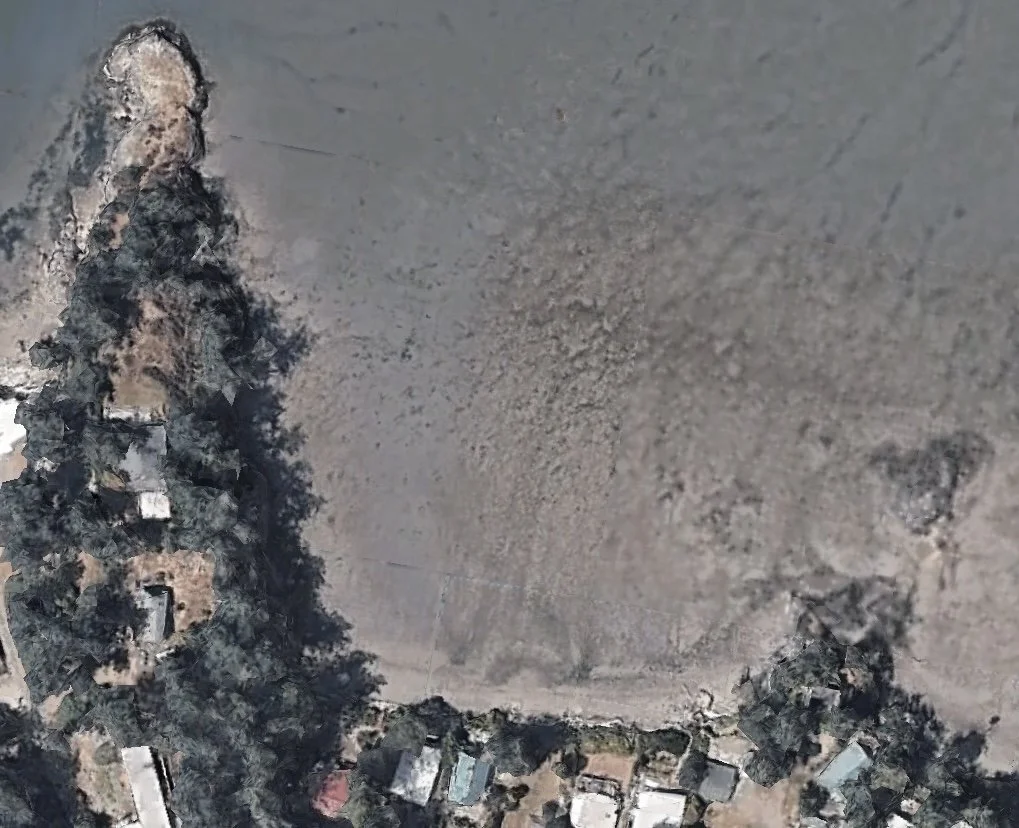
Aerial view of pocket beach
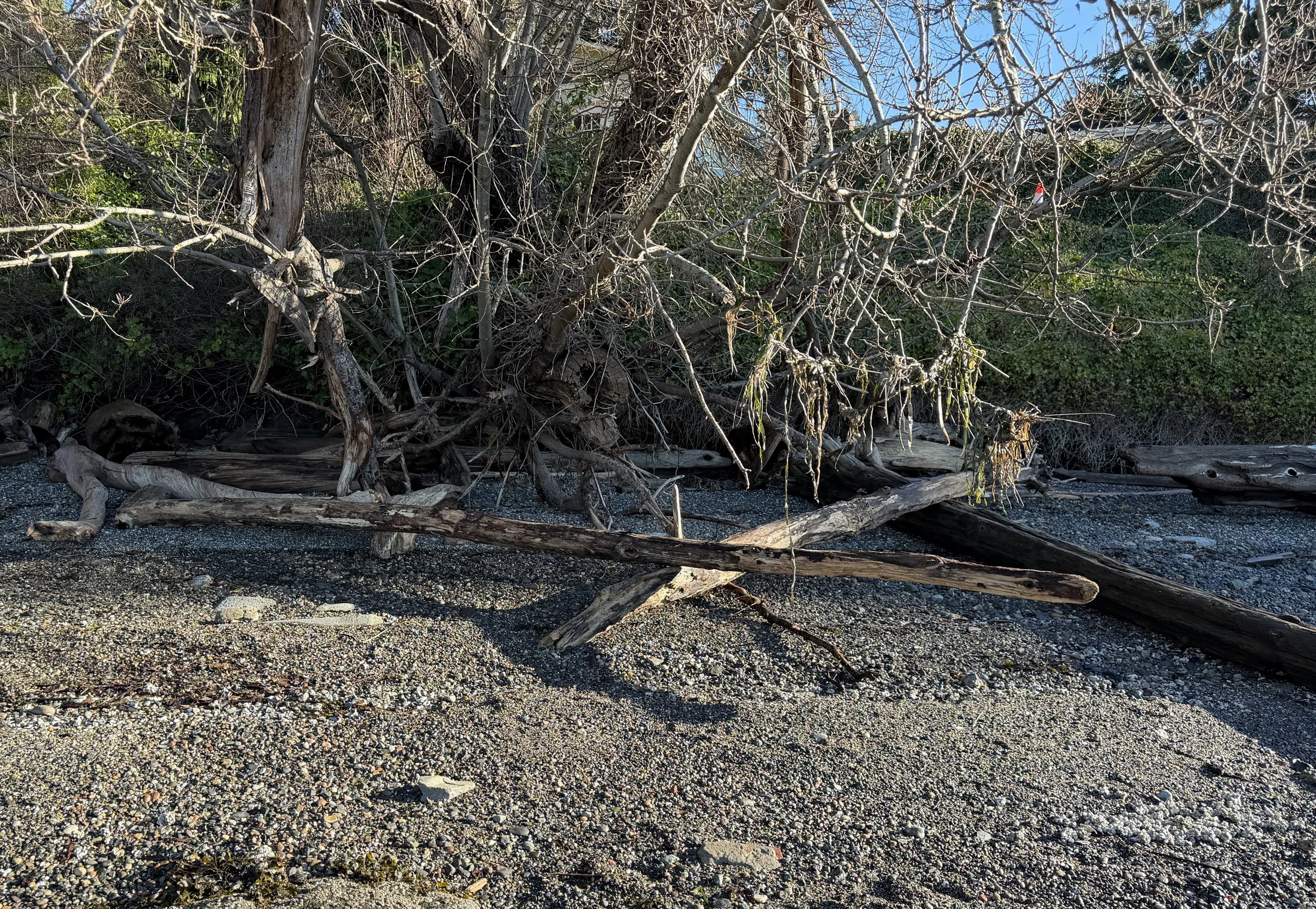
Ground view of north end of beach - January 2026
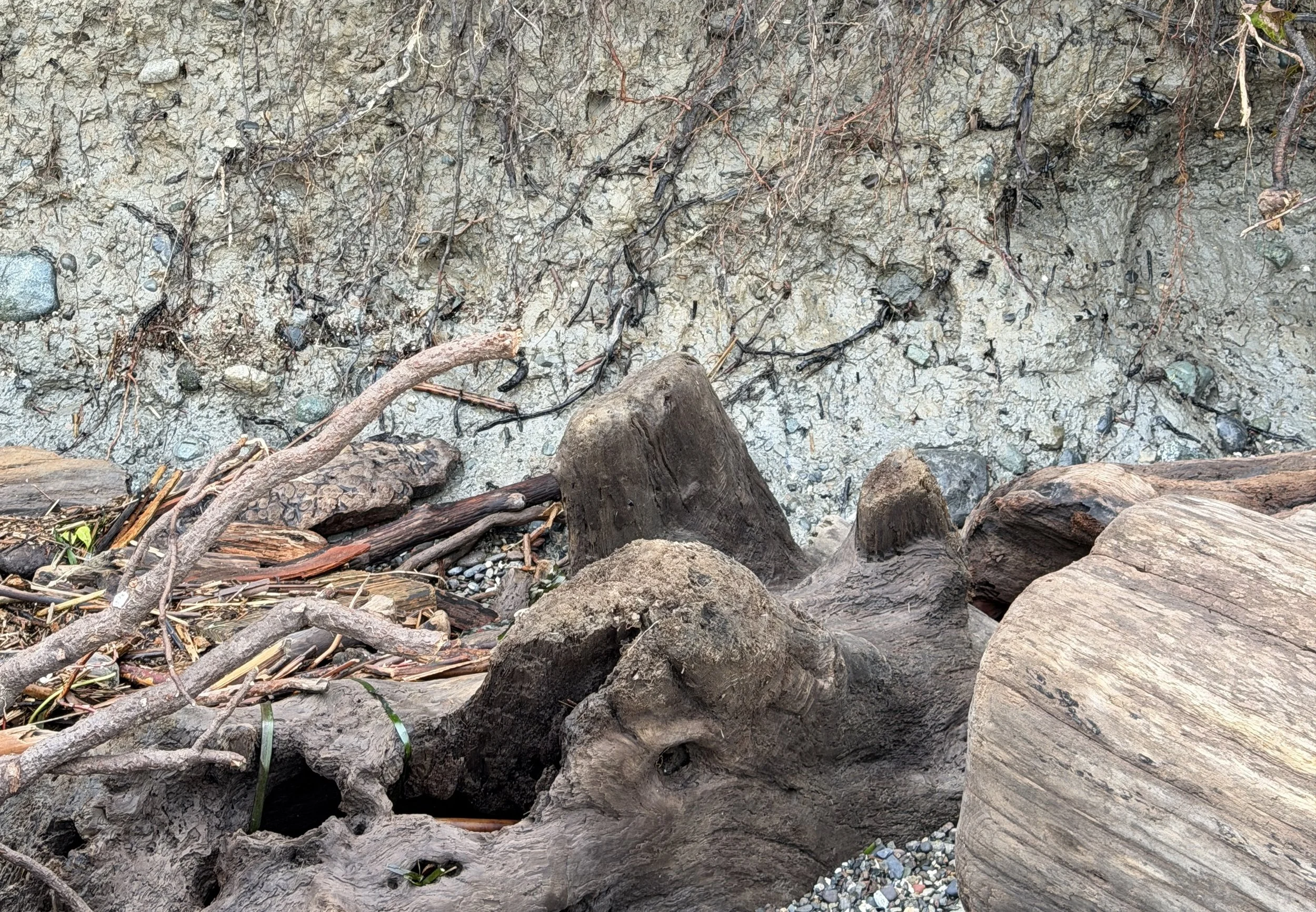
Bank erosion with exposed clay
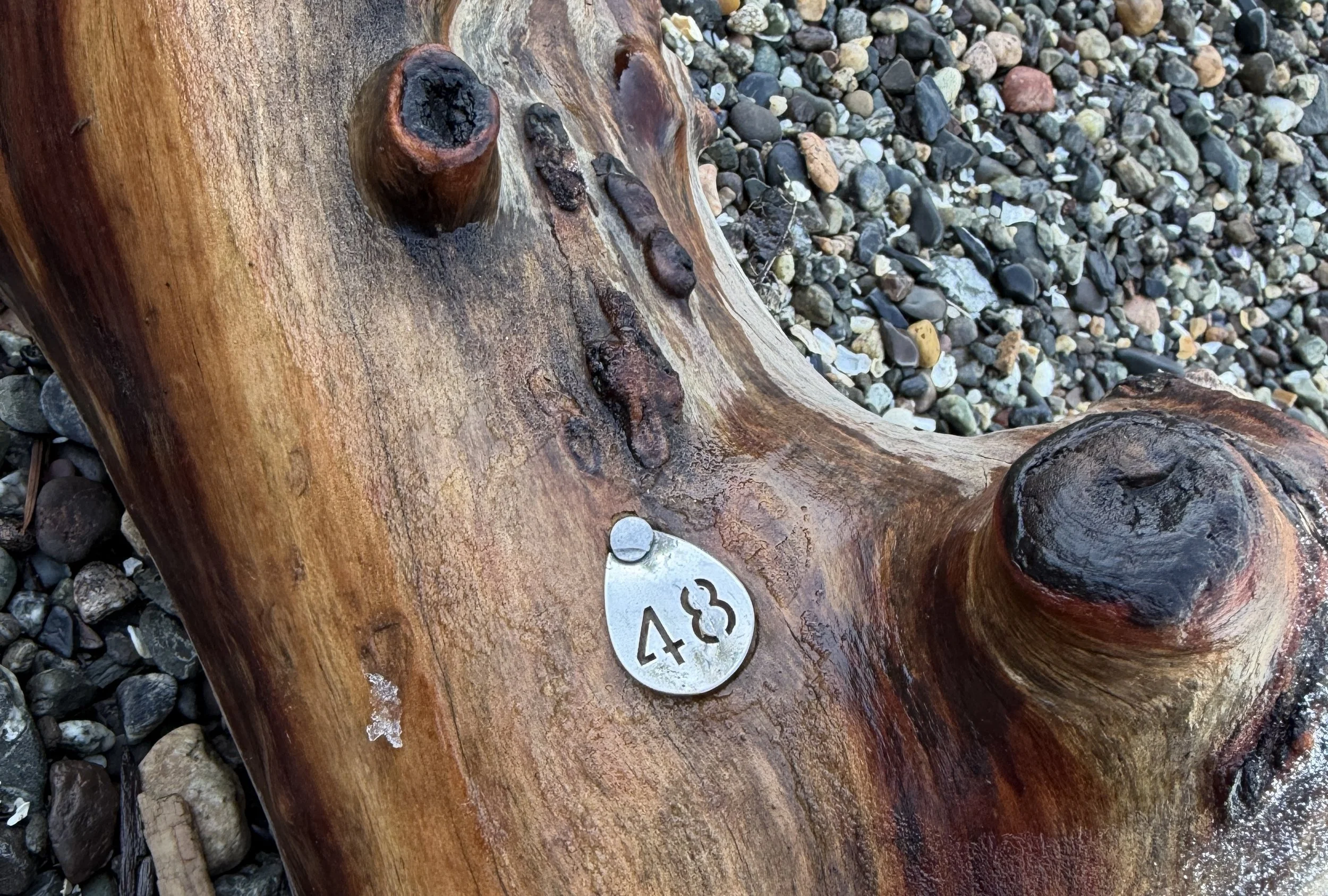
Drift log No. 48
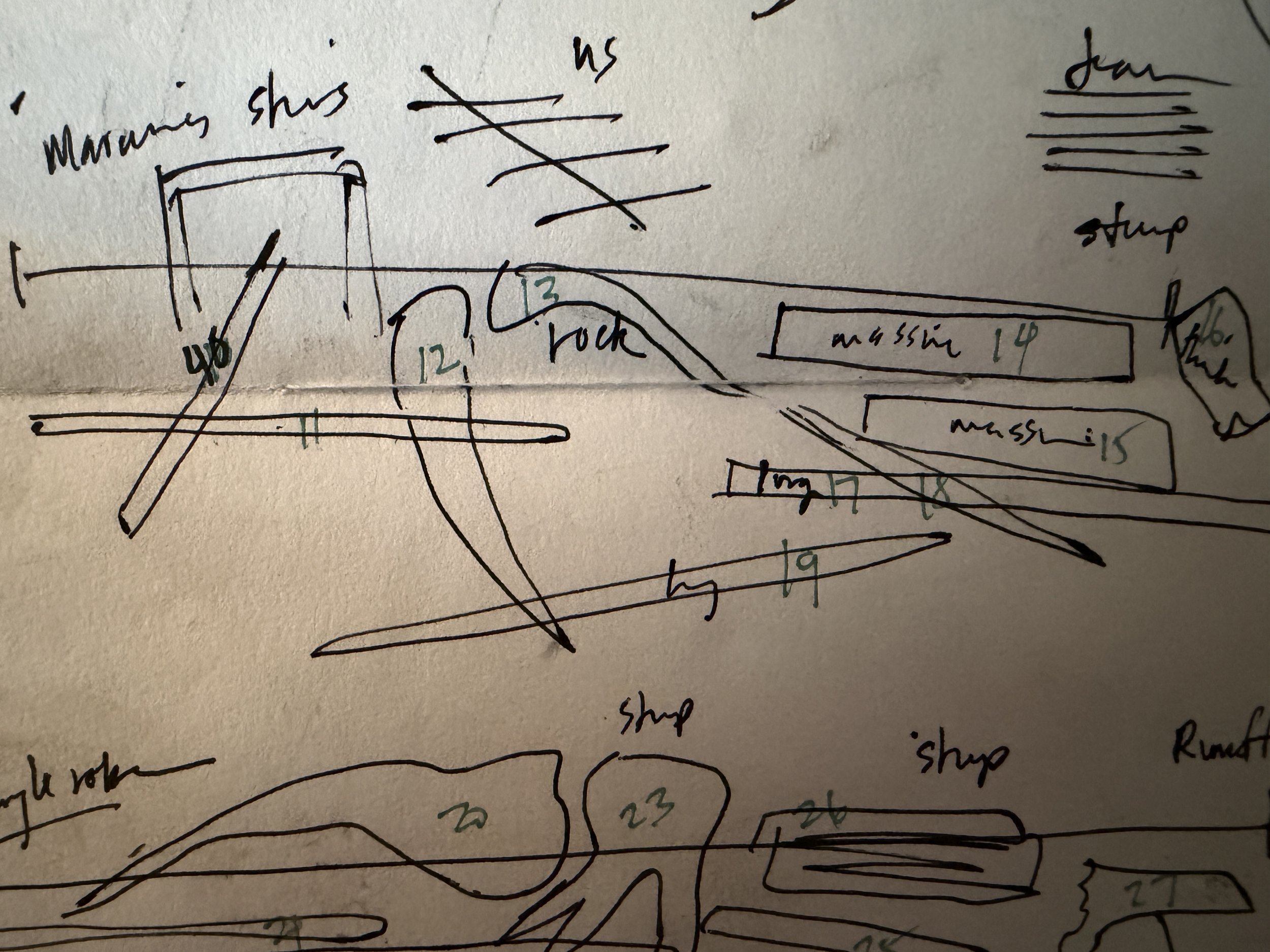
Field sketch of drift log locations - January 2026
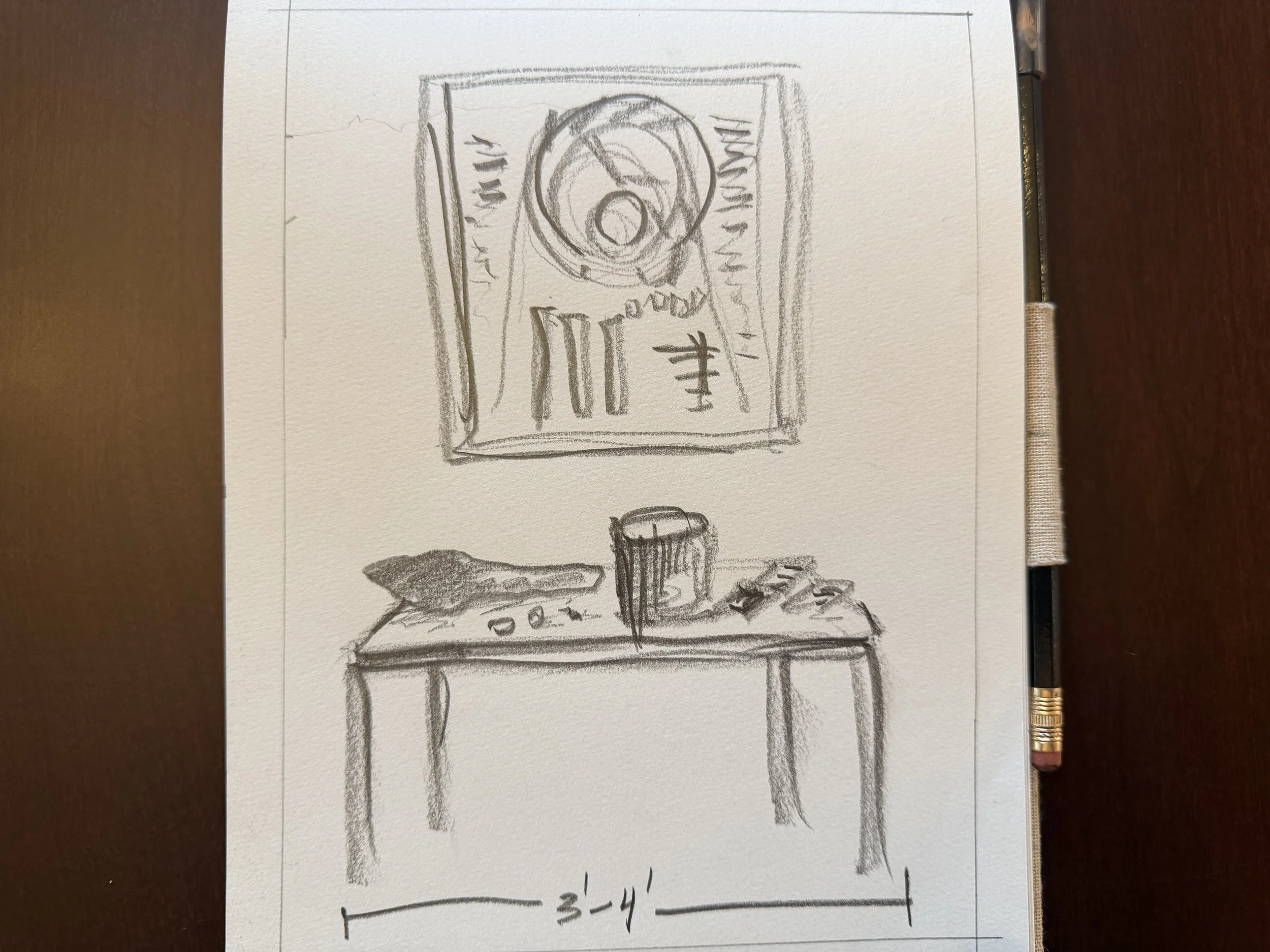
Proposed display for Surge exhibition
Skagit Bay at high tide